When selecting a hot melt adhesive for your packaging application, understanding how it performs under heat is crucial. That's where SAFT — Shear Adhesion Failure Temperature — comes in.
SAFT is a critical property that determines the performance of hot melt adhesives under elevated temperatures. For industries where products may be exposed to heat during storage, transport, or end-use, knowing your adhesive's SAFT value is essential for preventing costly bond failures.
Understanding SAFT in Hot Melt Adhesives
SAFT stands for Shear Adhesion Failure Temperature. It measures the temperature at which an adhesive bond fails under a constant shear load. In simpler terms, it tells you how hot your environment can get before your adhesive gives way.
In various industries, hot melt adhesives are relied upon for their fast-setting properties and excellent bond strength. However, their performance at high temperatures is a crucial consideration, especially when applications involve exposure to heat or temperature fluctuations.
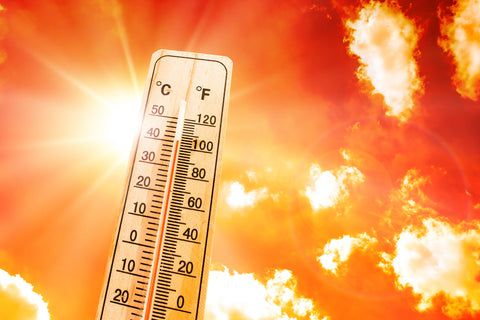
This is particularly important for applications where:
- Products are stored in non-climate-controlled warehouses
- Goods are transported in containers that may reach high temperatures
- Packaging is exposed to direct sunlight or heat sources
- Products are exported to regions with extreme climates
How is SAFT Tested?
The SAFT testing process involves applying a controlled shear load to a bonded sample and gradually increasing the temperature. Here's how it works:
- Specimen Preparation: Samples of the hot melt adhesive are applied between two substrates, in the pictures shown these are cardboard, but they change depending on each application.
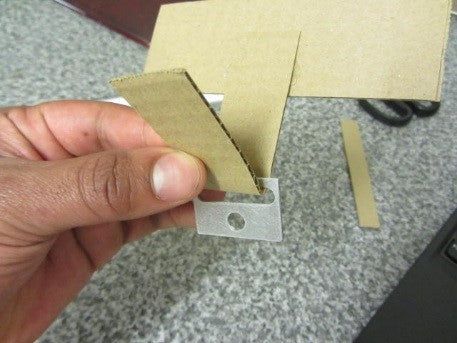
- Curing: The adhesive is allowed to cool and solidify, creating a strong bond between the substrates.
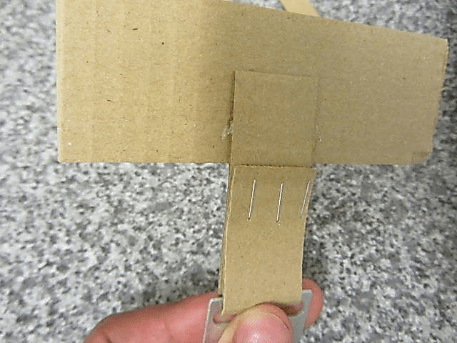
- Testing Setup: The bonded substrates are securely fixed in an oven, with a known weight attached to them — typically this is either a 500 gram or 1000 gram weight.
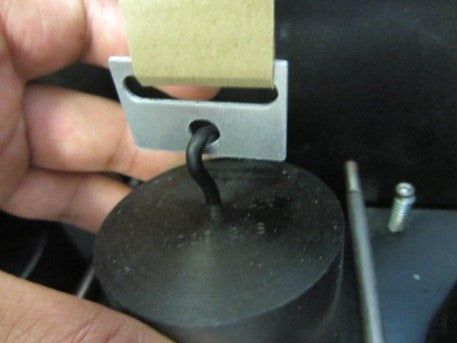
- Temperature Ramp-up: The test starts at ambient temperature, and the temperature is then increased by 1°C per minute through use of a technical computer program. This ramp-up continues until the adhesive joint fails due to shear stress and the weight drops. When this happens, the weight hits a sensor on the oven floor which records the oven temperature, which will also therefore be the failure temperature of the adhesive.
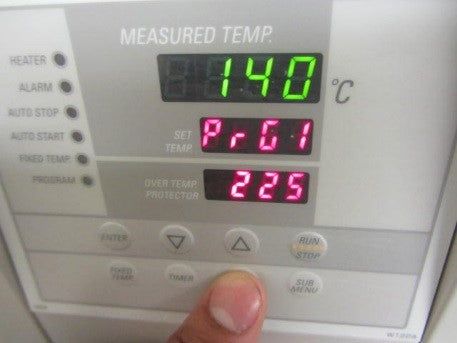
- Failure Detection: During the test, the program continuously records the temperature and identifies the exact degree at which the adhesion fails.

- SAFT Determination: The temperatures are captured on the above screen — typically several samples of the same grade would be run to get an average.
The failure mode is also observed — whether the adhesive fails cohesively (within itself) or adhesively (at the substrate interface) — which provides additional insight into performance characteristics.
Importance of SAFT in Hot Melt Adhesive Applications
Knowing the Shear Adhesion Failure Temperature of a hot melt adhesive is crucial for selecting the appropriate adhesive for specific applications. High SAFT values indicate that the adhesive can maintain its bond strength and integrity at elevated temperatures.
This property is particularly vital in applications where the adhesive will encounter high temperatures during the product life — such as export across the equator, washing machine temperatures, hot weather etc.
By understanding the SAFT of hot melt adhesives, you can ensure that the chosen adhesive will perform reliably, even under demanding environmental conditions, reducing the risk of bond failure and potential product defects.

Why SAFT Matters for Your Operation
Understanding your adhesive's SAFT value helps you make informed decisions about:
Practical Implications
In the real world, SAFT values translate directly to reliability. A hot melt with a SAFT of 60°C might be perfectly adequate for a climate-controlled distribution centre in the UK, but could fail catastrophically in a shipping container sitting on a dock in the Middle East where internal temperatures can exceed 70°C.
Choosing the Right Adhesive
When evaluating hot melt adhesives for your application, consider:
- Storage conditions: What temperatures will your packaged products experience?
- Distribution routes: Will products travel through regions with extreme temperatures?
- Safety margin: Always select an adhesive with a SAFT comfortably above your expected maximum temperature
- Application requirements: Balance SAFT with other properties like open time and bond strength
Our technical team can help you identify the optimal adhesive for your specific temperature requirements. We'll analyse your supply chain, storage conditions, and application needs to recommend the right solution.