Learning Centre · Technical Guide
Pastille vs Prill: Two Ways to Shape a Hot Melt Adhesive
A short look at the two cooling processes used across the industry to turn molten hot melt into the beads that arrive on your pallet — and what the shape does (and doesn't) tell you.
The short version
Same adhesive. Same spec. Different shape.
A pastille and a prill are two shapes that come from two different ways of cooling molten hot melt adhesive. For a given formulation the chemistry, the data sheet and the in-line performance are identical — only the bead geometry changes.
Both formats are widely used across the hot melt industry, and many manufacturers run both processes side by side.
In shortBead shape is a signature of the cooling machine, not the formulation.
What's the same
- Softening point & viscosity
- Open time & bond strength
- Behaviour on your line
- Published data sheet
What's different
- Shape of the bead (flat vs round)
- Cooling method (steel belt vs water)
- Machine used to form it
- Often the bag it ships in
Step one
It all starts in the same tank of molten adhesive
Every batch of hot melt adhesive begins life as a hot, free-flowing liquid. At this point there is no pastille and no prill — just molten adhesive that needs to be cooled into clean, pourable beads.
The formulation in that tank is the same no matter which route it takes next. There are two well-established ways to cool and shape it, and most manufacturers run both.
Two routes from liquid to bead
Pastille or prill? It's just how it cooled — and bagged.
From the cooling line all the way to the sack on your pallet, the two routes run in parallel. Same adhesive on both sides.
Route 1 · Cooling
Pastilles
Steel-belt process · Sandvik / IPCO Rotoform
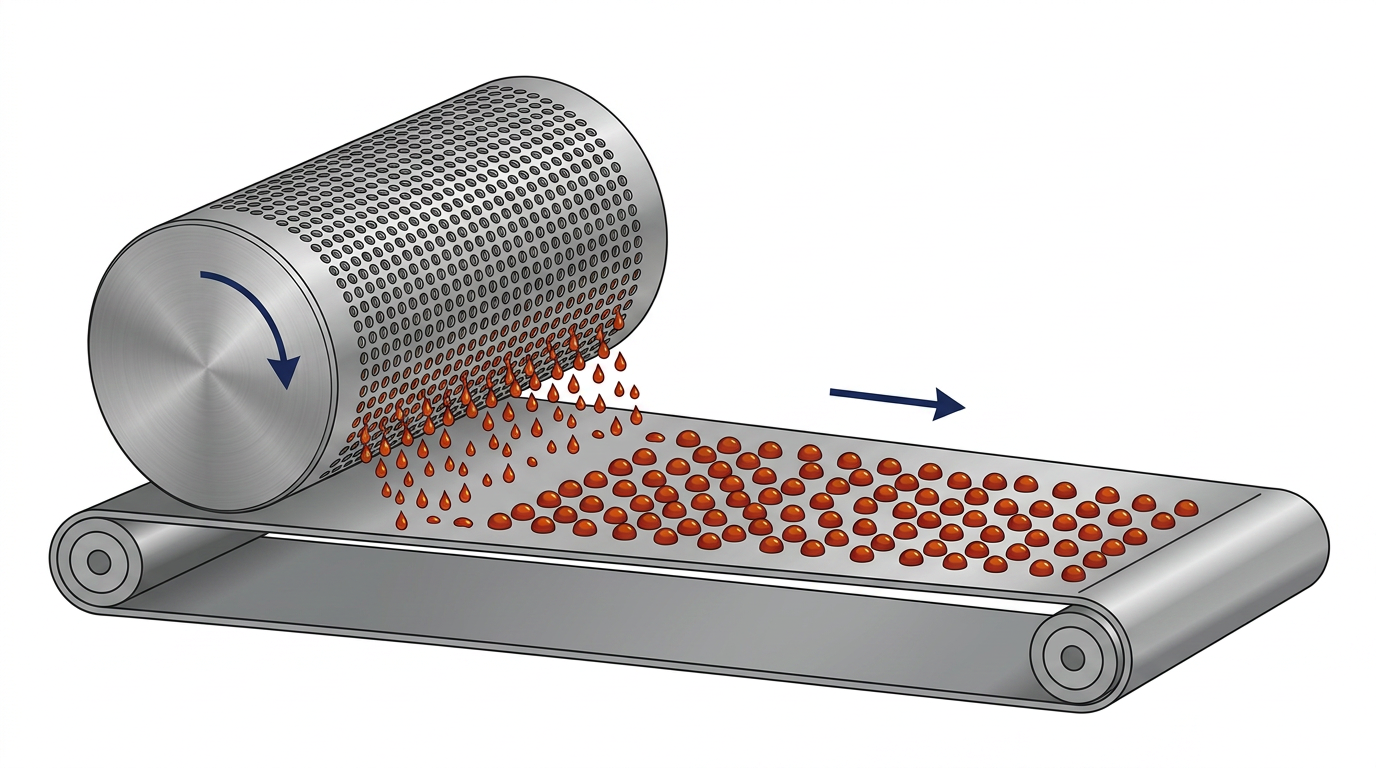
Molten adhesive is laid down as uniform droplets onto a moving stainless-steel belt. The belt is cooled from below with water — the adhesive itself never touches it. By the end of the run, each droplet has set into a neat, half-domed bead.
Think of the flat-bottomed shape of a chocolate button. Dominant from the late 1970s onwards, which is why most hot melt historically arrived as pastilles.
Route 2 · Cooling
Prills
Underwater pelletizing · Gala / MAAG
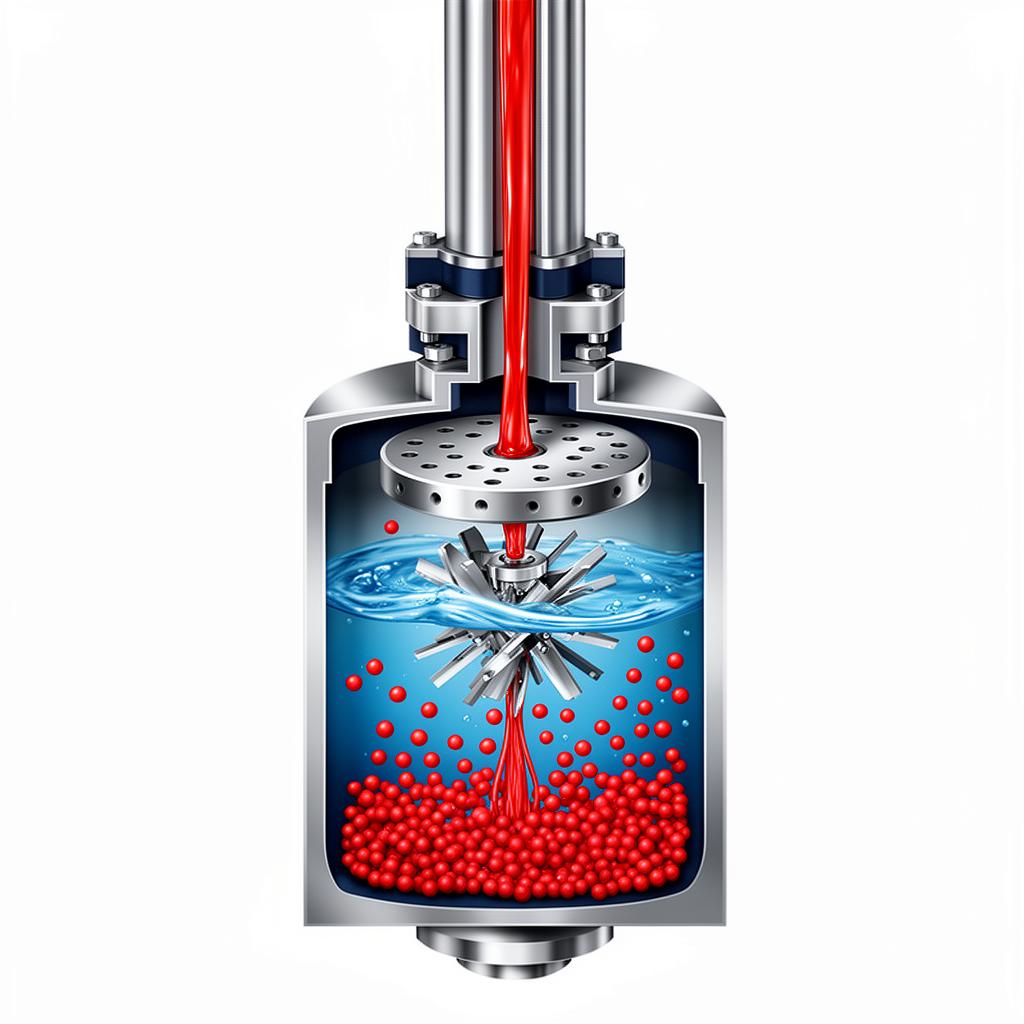
Molten adhesive is pushed through a die directly into a chamber of circulating water. Spinning blades cut the emerging adhesive into pieces the instant it appears, and the water chills them on contact.
Surface tension rounds each freshly cut piece before it sets, producing a more spherical bead. It's the newer approach, and its share of production has been growing — which is why you're seeing more prills now.
Route 1 · Bagging
Valve sack
Often paired with pastilles
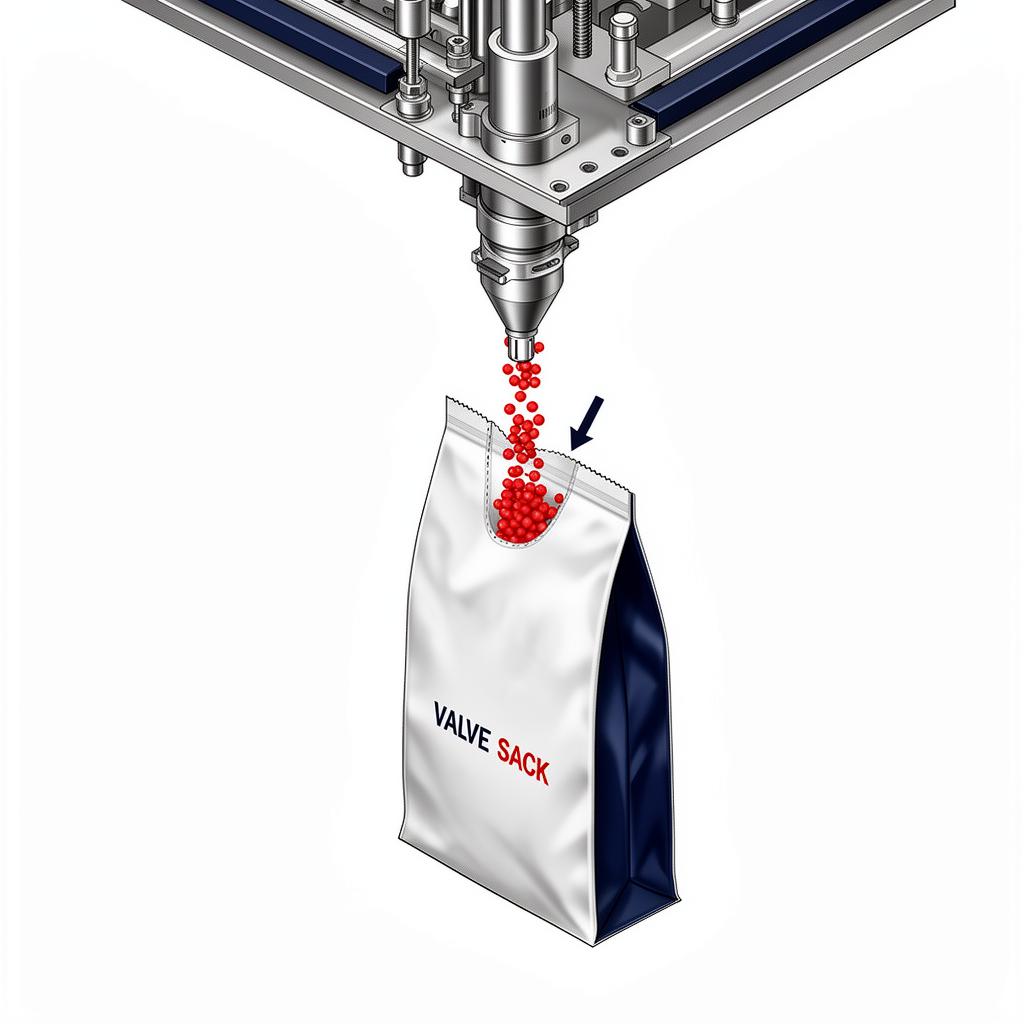
A pre-made sack is slipped onto a filling spout and held in place. Adhesive flows in through a small self-closing valve in the top corner — no separate sealing step required. Once the sack drops off the spout, the valve folds shut under the weight of the contents.
Pre-made sacks are produced off-line and brought to the filling station, where each one is loaded onto the spout in turn.
Route 2 · Bagging
Form-fill-seal (FFS)
Often paired with prills
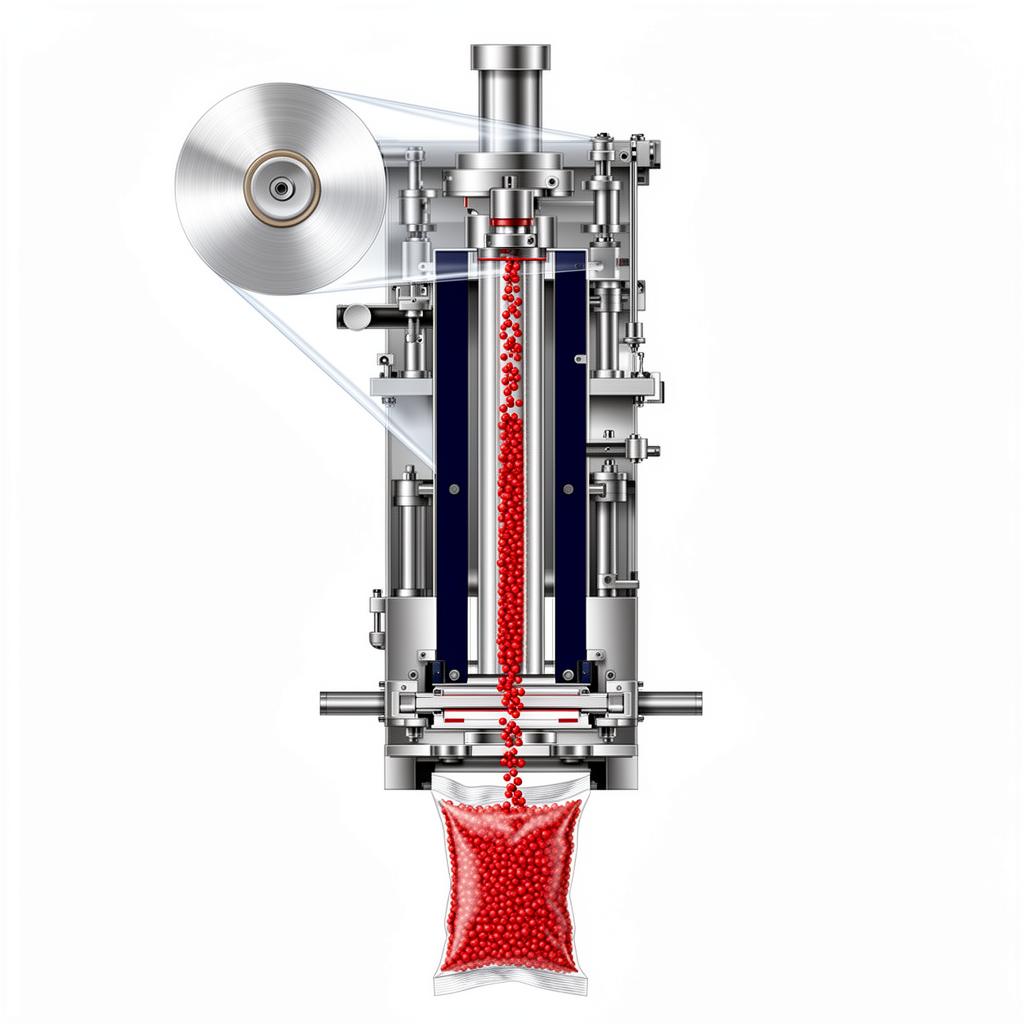
A single roll of plastic film feeds into the machine. The film is wrapped into a tube, heat-sealed along the seam, filled with adhesive from above and then heat-sealed at the top and bottom to form a finished pillow pack — all in one continuous motion.
The film roll is loaded directly onto the packaging line, so the bag and the fill happen in one continuous step.
Before the tank
The only differences are in handling — and they're subtle
Once the bead hits a hot melt tank and melts, there is no difference at all. The small distinctions are in how the bead behaves before it gets there.
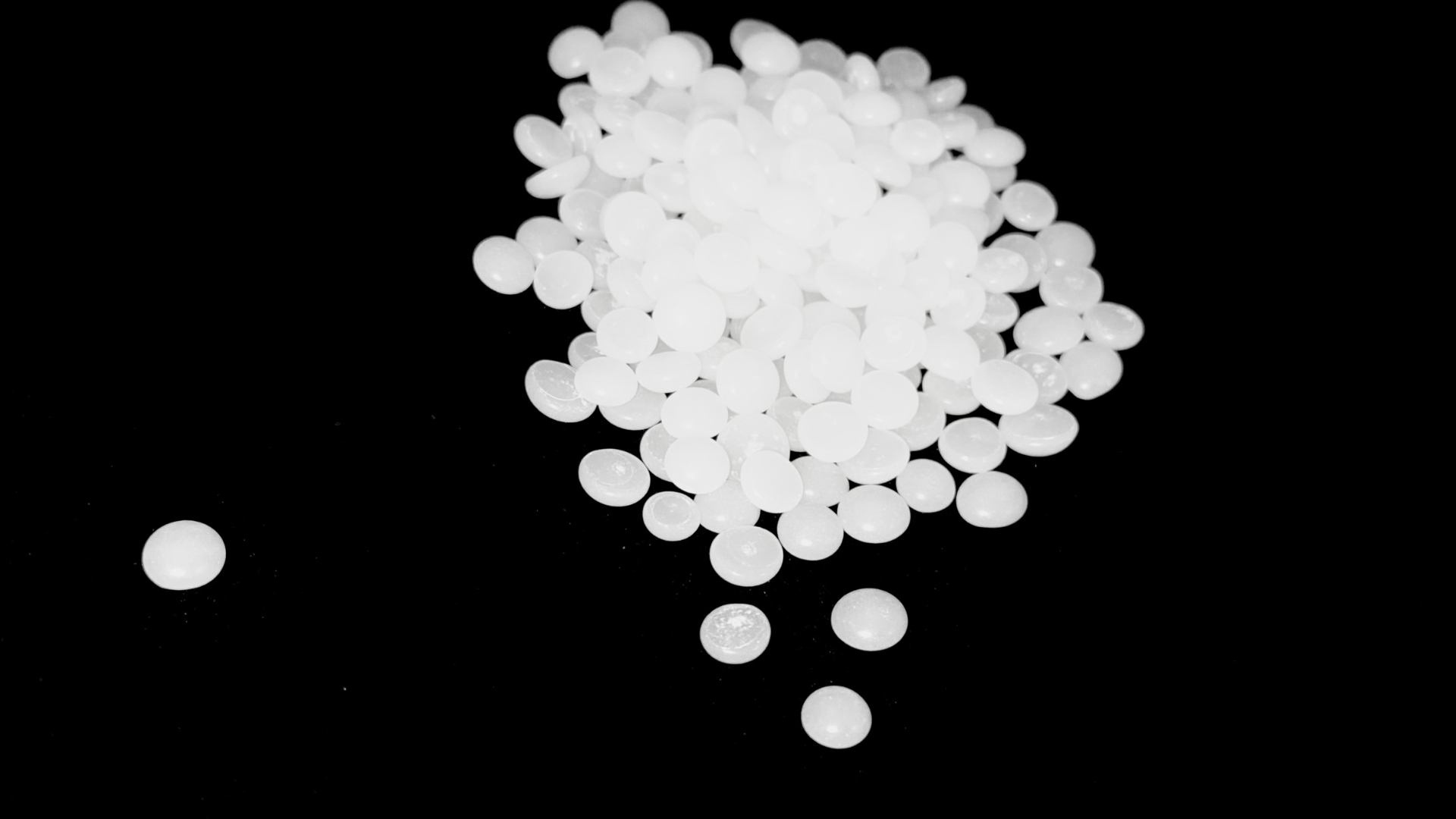
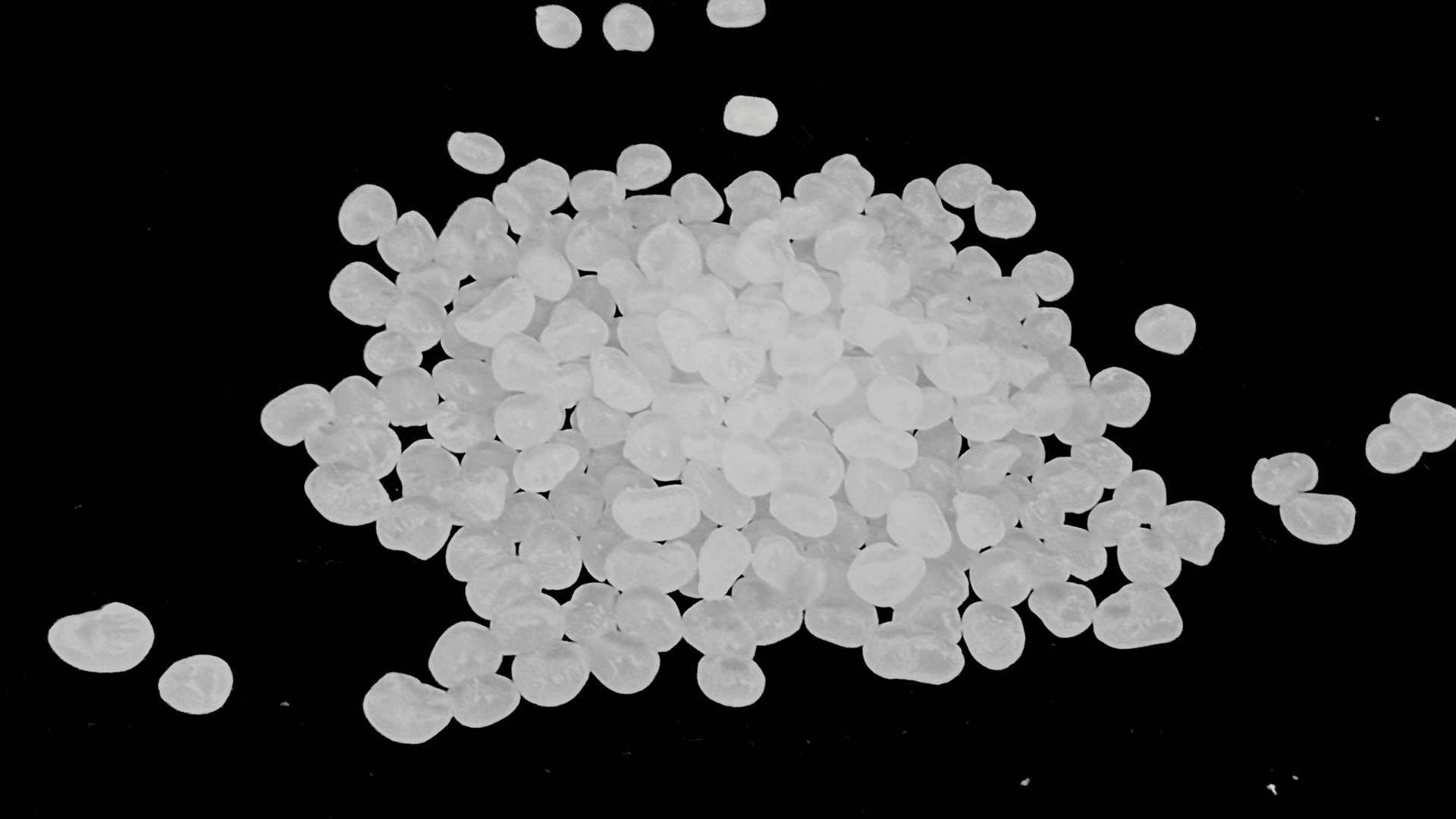
- Shell crystallisation. The Gala underwater process cools the prill in a way that lets the outer shell crystallise a touch more cleanly, which can make it feed beautifully through an autofeeder. Pastilles feed perfectly well too — the gap is small.
- Anti-stick coating. Prills tend to be finished with a liquid coating that wraps every bead evenly to stop tackiness. Pastilles are finished with a powder coating that does the same job. Different method, same outcome — again, extremely subtle.
If your line is happy with one, it will be happy with the other.
In the tank
Once it melts, the shape disappears
Tip pastilles of a given grade into a hot melt tank and they melt down to a particular liquid. Tip prills of the same grade into the same tank and they melt to precisely the same liquid.
With a coloured grade you can see it for yourself — beads in, uniform molten adhesive out, ready to bond exactly as the data sheet describes.
What to remember
Shape is not specification.
A rounder or flatter bead tells you which cooling process was used, and nothing more. Pastille or prill, it's the same adhesive doing the same job.
Download Free Technical Guide
The two cooling processes behind hot melt beads
To get your FREE copy of this hints & tips sheet, simply fill in the details below and we'll send you the complete document straight to your inbox.