
Maximising Performance: The Impact of Temperature on Hot Melt Adhesive
Temperature plays a vital role in hot melt adhesive applications, influencing adhesive performance and overall stability. Discover why using a hot melt adhesive that maintains its integrity at lower temperatures can lead to improved operational efficiency and reduced downtime. Watch the video below for a brief overview:
This embedded video is blocked because it uses cookies that require your consent. Please accept Targeting cookies in our cookie preferences to watch this video.
The Test: Comparing How the Same Glue Performs at Different Temperatures
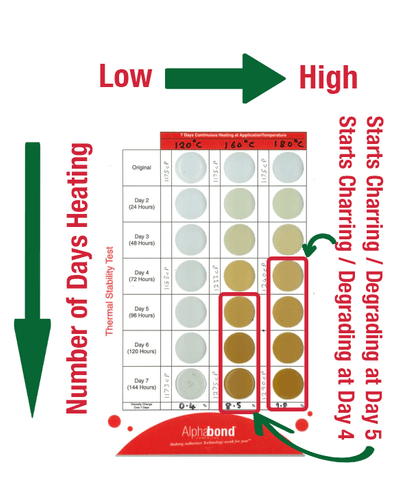
To understand the impact of temperature on hot melt adhesive, we conducted a comprehensive test using the same adhesive across three different temperatures: 120, 160, and 180 degrees Celsius. Our focus was to evaluate how quickly they degraded under varying temperatures.
The Results: Degradation and Charring Effects
First of all, it's important to understand how degradation can be measured. In this whitepaper we measure how quickly the glue changes (normally increases) in viscosity with time (or to you and me, that's how fast the glue thickens up and goes dark — causing blocked nozzles and other issues).
At 120°C, the degradation was minimal, with only 0.4% increase in viscosity observed. However, at 160°C the increase was 8.5%, and at 180°C it was 9.8%. These findings demonstrate the critical importance of temperature control.
The Consequences: Charring, Blocked Nozzles, and Downtime
The degradation and charring of hot melt adhesive can have adverse effects on equipment and overall production efficiency. As the adhesive degrades, it can lead to charring in the tank and result in blocked nozzles. This, in turn, causes unexpected downtime and disrupts the production process.
Benefits of Running Your Adhesive Cooler
- Less Unplanned Maintenance — maintain stability at lower temperatures
- Reduced Downtime — fewer charring and blockage issues
- Fewer Blocked Nozzles — uninterrupted adhesive application
- Fewer Replacement Filters Needed — cleaner adhesive flow
💡 Top Tip!
Keep your glue tank operating at a lower temperature than your hose and gun. This means your glue is kept cooler for longer.
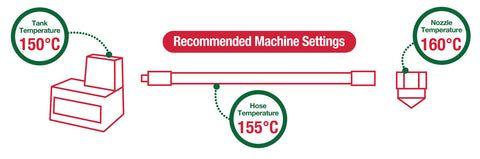
Temperature control is a critical factor in hot melt adhesive applications. By selecting a high-quality hot melt adhesive that exhibits minimal degradation and can operate at lower temperatures, you can experience reduced maintenance, improved productivity, and fewer downtime incidents.
Using the Stand-by Button on a Nordson Tank
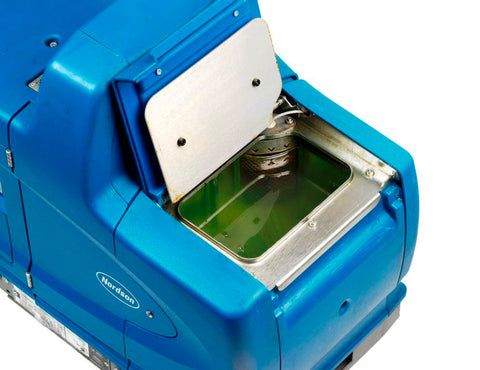
A little known secret in the world of hot melt gluing is the stand-by button on Nordson tanks. This (in its default setting) will drop the set temperatures down to 75% of whatever they were set at — e.g. if your glue is set at 160°C, after pressing the button, the temperatures will drop to 120°C.

But did you know that generation 6 technology actually runs at a lower temperature than a Nordson stand-by button does when your standard operating temperature is 160°C? Gen 6 runs at just 98°C in the tank — all the time — so you never need to go into stand-by.
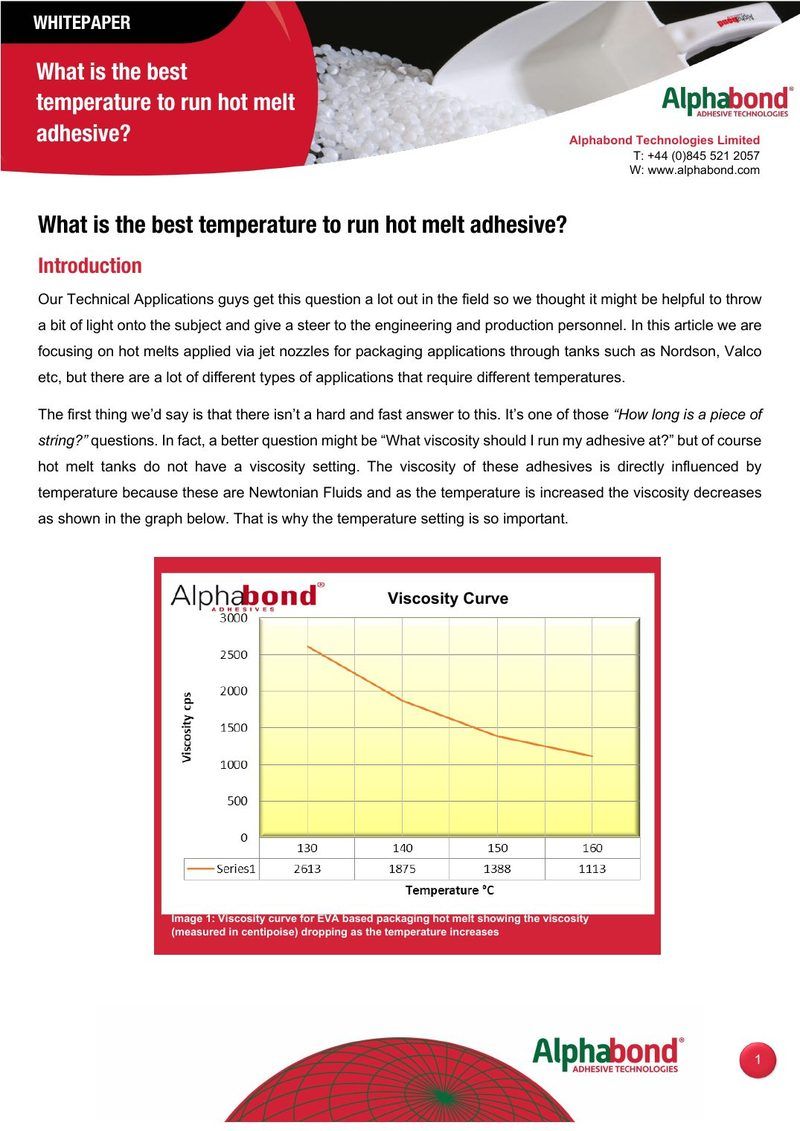
Interested in learning more about the technical details? Download our Technical Whitepaper below for full test methodology and viscosity analysis.
Download Technical Whitepaper
Full test methodology, viscosity data and detailed analysis
To get your FREE copy of this hints & tips sheet, simply fill in the details below and we'll send you the complete document straight to your inbox.
Download Technical Whitepaper
Full test methodology, viscosity data and detailed analysis
To get your FREE copy of this hints & tips sheet, simply fill in the details below and we'll send you the complete document straight to your inbox.
Need Expert Help?
Our specialists can help optimise your adhesive temperature settings.
Book a Discovery Session