
7 Cues to Reduce Your Factory Production Line Downtime!
How much is downtime on your production line costing you? 💲 We've put together seven cues to reduce your downtime with hot melt adhesives.
Cue 1: Keep Cool — Control Temperatures
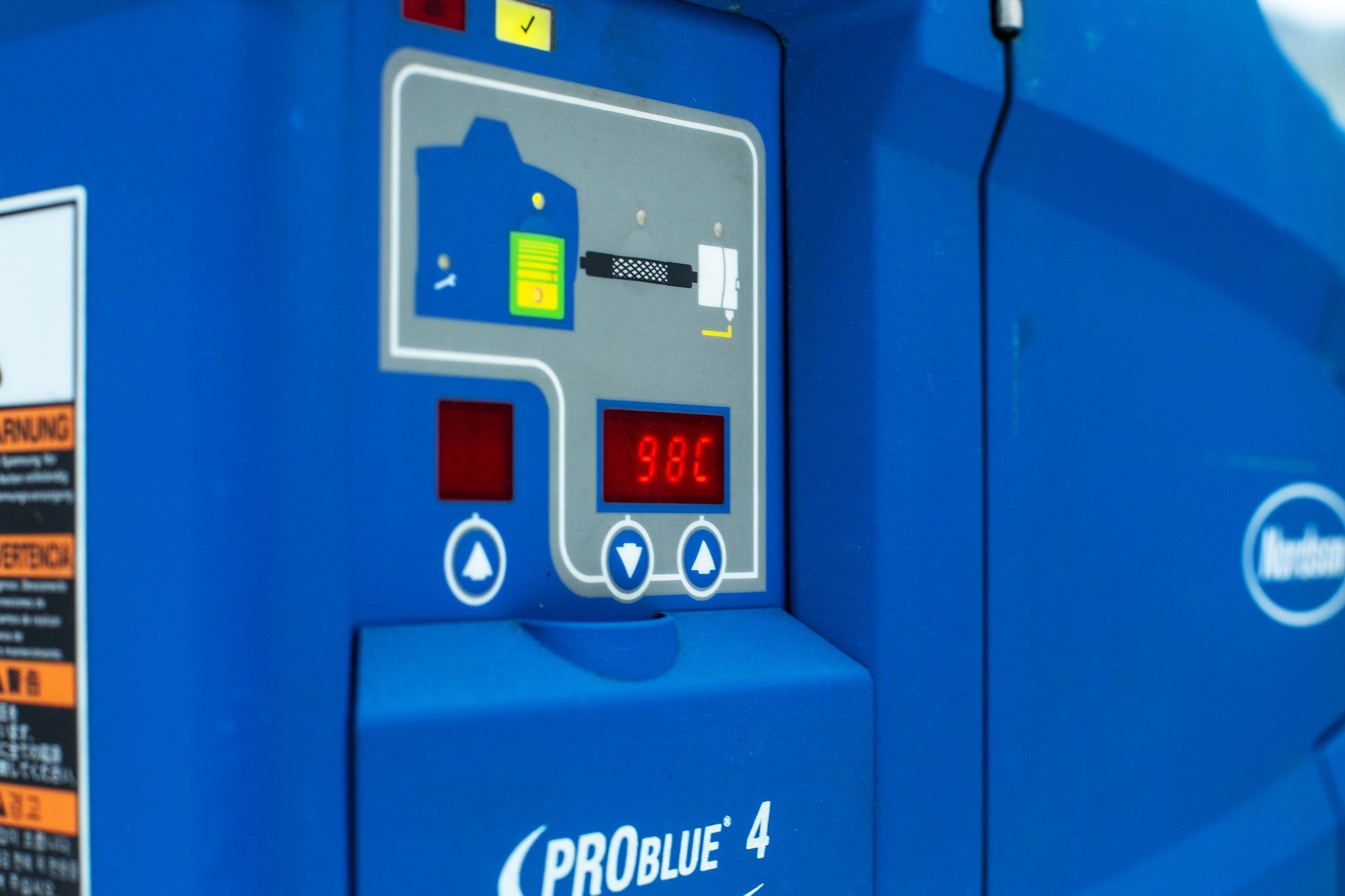
Check that your tank, hose and gun are set to the lowest temperature possible for the adhesive. Tank temperature should be lower than the hose and gun temperature (e.g. Tank: 98°C, Hose: 110°C, Gun: 115°C).
The glue only needs to be at a higher temperature during bonding. So, if your tank is at the same temperature as the gun, energy is being wasted to keep the tank at this higher temperature. You also risk more char and thermal degradation, which causes downtime by needing to turn off and clean the tanks, hoses and nozzles.
Cue 2: Change Your Filters!
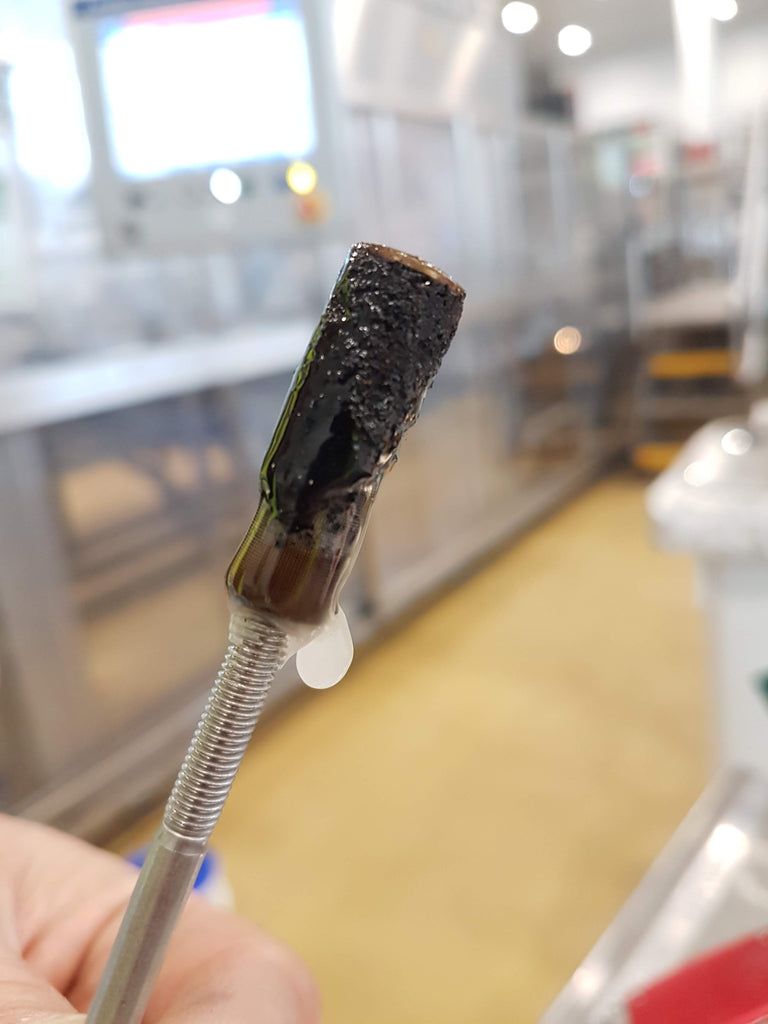
Filters catch debris before they get to the nozzle, preventing as much downtime as possible. We often see issues where the filter has been left to gather debris to the point where it can take no more! We recommend that you:
- 🟢 Change your in-line filters every 3 months in the tank
- 🟢 Ensure that the filter mesh matches the nozzle size
Cue 3: Avoid Overspray
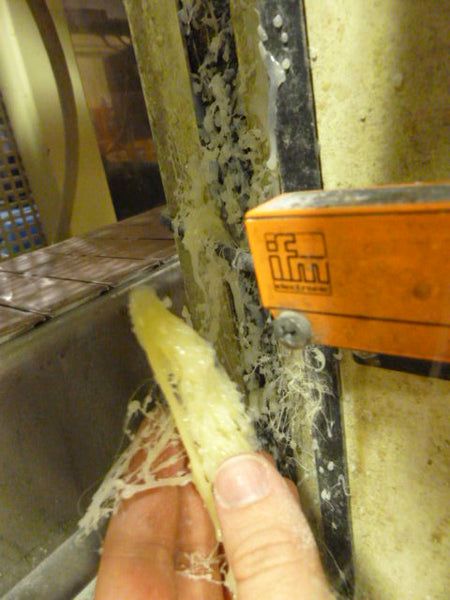
Overspray occurs when the bead length of the glue is too long, causing the glue to bleed onto the machinery rather than the substrate, causing downtime needed to clean the machinery. To avoid this:
- 🟢 Ensure the bead length starts and stops in the correct place before beginning production
- 🟢 Book an adhesive health check with your glue provider
Cue 4: Drain Adhesive Regularly
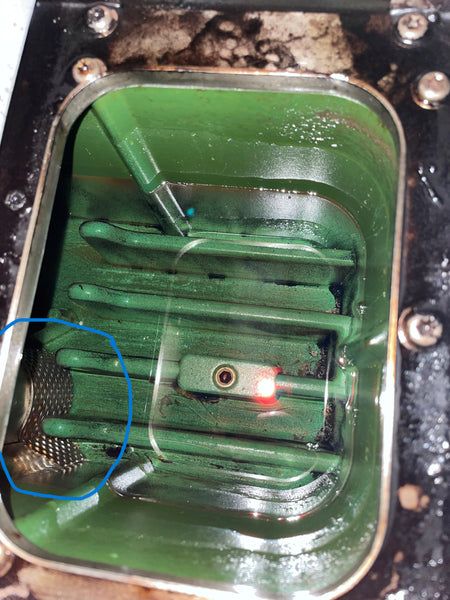
We recommend draining 1 litre of adhesive every 2 months, which keeps the manifold clear of char. The manifold sits below the bottom of the tank, where char settles due to corners and dead spots where there is no glue flowing.
Cue 5: Use Temperature Standby Button
Activating standby typically drops the temperature to about 75% of the regular set temperature whenever the tank is not in use. For example, if the tank is set to 160°C 🔥, it will drop to 120°C ❄️ in standby mode, thus massively reducing the opportunity for the glue to char and block your hoses and nozzles.
We recommend that if the machine is left unoperated for more than 2 hours, standby mode should be used. There is another option — upgrade your adhesive to one that runs at a lower temperature, such as our generation 6 and 7 hot melts that run at 98°C in the tank:
- ✔️ No blocked nozzles
- ✔️ No fuming or odour
- ✔️ No degradation or charring
- ✔️ Up to 70% reduced energy consumption
- ✔️ Reduced burns risk
Cue 6: Store Your Adhesives Correctly
It's easy for debris to enter your hot melt tank if you don't store your glue appropriately. We recommend that you keep your glue in a dry, watertight container with a lid so no debris is transferred to the tank.
Alphabond can provide our customers with:
- ✔️ Appropriate adhesive storage bins to keep debris out
- ✔️ Plastic scoops to stop debris entering in the transfer from the bin to the tank
- ✔️ Safety equipment for operators to prevent burns
Cue 7: Visual Control Point
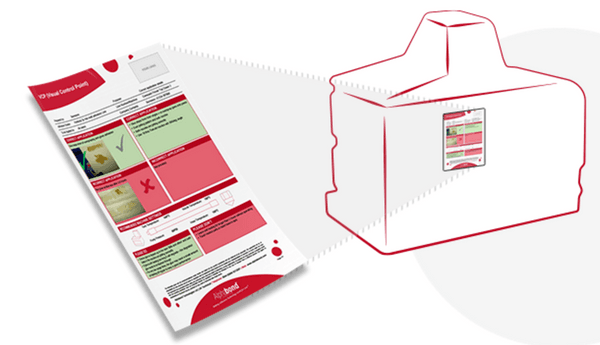
A visual control point or VCP is a document that specifies the optimum running conditions for your adhesive. The VCP should be displayed in a prominent location so all operators know the optimum temperatures and settings for the glue. This should allow the adhesive to run as cool as possible, free of char and build-up.
Hopefully these cues have helped you cut down on your downtime. If you would like to get in touch with us about your adhesives and discuss how we can help reduce your downtime, get in touch.
Need Expert Help?
Our adhesive specialists can help reduce your factory downtime with a tailored adhesive strategy.
Book a Discovery Session