
Alphabond Field Report
How a Recipe Box Packer Cut Hot Melt Energy Use by Two Thirds
Most packaging lines run their hot melt far hotter than they need to. Not because anyone did the maths, but because 160°C is what the tank was set to when it was installed, and nobody has touched it since.
Here's what happened when one of the UK's biggest recipe box packers questioned that number.
- Field Report
- Food Manufacturing
- Recipe Boxes
- Case & Lid Sealing
- Lantech
- Robatech Concept
- Energy Saving
- UltimateCool
The starting point
The line was a Lantech lidding machine fed by a Robatech Concept tank with four hoses and four nozzles, a setup you'll find in hundreds of UK packing halls. Their corrugate boxes were being sealed with a standard hot melt running at 150°C in the tank, 155°C in the hoses and 160°C at the nozzles. The line worked, mostly. But they were losing time to blocked nozzles, paying to keep four litres of adhesive at oven temperatures around the clock, and the bond itself was nothing to write home about. When we tested the incumbent adhesive, some boxes showed zero fibre tear. The glue was letting go before the cardboard did.
What we changed
We swapped the tank over to UltimateCool 98 Plus, a hot melt designed to run below 110°C, and turned the temperatures down to 110°C in the tank, 115°C in the hoses and 125°C at the nozzles. Same line, same boxes, same speed.
The result was full fibre tear on every box. That means when you try to pull the flap open, the cardboard rips before the glue bond gives way. It's the difference between a box that survives the courier network and one that arrives open.
The numbers
This is the bit that gets finance directors interested.
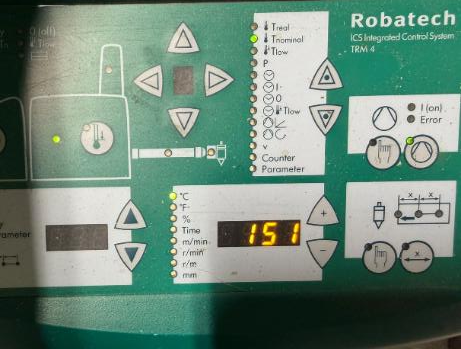
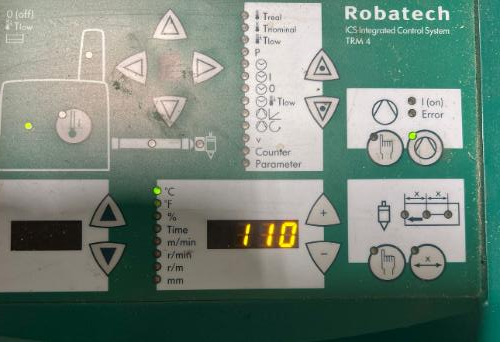
Running the tank at 110°C instead of 150°C saves around 3,948 kWh per tank per year, roughly a 45% cut in adhesive energy use. Once the line is optimised down to 98°C in the tank, that rises to 5,796 kWh and a 66% reduction, worth over £2,000 per tank per year at current energy prices and cutting around 3 tonnes of CO₂ per tank annually.
And because a stronger adhesive needs less of itself to do the job, coat weights dropped from 4.41 grams per box to 2.74 grams. That's roughly 31% less adhesive bought, melted and applied, box after box, all year.
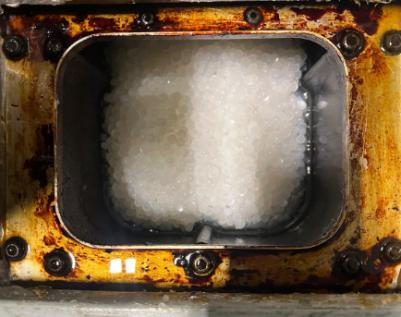
Cooler running also means far less char. Char is the burnt adhesive debris that builds up in tanks and blocks nozzles, and blocked nozzles were exactly what this customer wanted rid of. Lower temperatures starve the problem at its source, so the spares bill and the downtime shrink together.
Why this matters even if you don't pack recipe boxes
The physics doesn't care what's in the box. If your hot melt tank is running at 150°C or more, you are probably paying for heat you don't need, glue you don't need, and downtime you definitely don't want. We see the same pattern in bakeries, dairies, breweries and distribution centres.
The trial took one day on the customer's own line, using their own product, with their own team watching. No lab conditions, no cherry picking. That's how we prefer to prove it.
Find out what your line could save
We'll come to your site, run the comparison on your line and give you the numbers in writing, whether they flatter us or not. If the sums don't stack up, you'll know that too, and that's still worth a morning.
Small print: Figures from a genuine Alphabond trial carried out in 2026. Customer details withheld at our discretion. Savings calculated at £0.3493 per kWh with a 4 litre tank running 168 hours per week.
Want the same numbers for your line?
One day on your line, with your product and your team watching. We bring the kit, do the maths and leave you the report either way.
Book a free trial on your line