

We are exhibiting at PPMA Show 2026, stand A85 in Hall 5, from Tuesday 22 to Thursday 24 September at the NEC in Birmingham. Doors open at 09:30 each day.
Trade shows are usually a lot of walking and not much progress. We would rather this one was useful for you. So instead of a stand full of brochures and a pitch nobody asked for, we are setting the three days up around one thing: real adhesive problems on real production lines, and what actually fixes them.
Book a slot
You can pick a morning or afternoon slot on any of the three days and tell us, in one line, the problem that is bothering you. That last part matters more than the time. It means we can brief the right person before you arrive, rather than starting from scratch while you stand there.
Fill the form in and you can also request a VIP invite. That covers free entry to the show plus access to the VIP Lounge for the day, refreshments included, which is a better place to sit down than the concourse.
Book your slot and request a VIP invite
Takes about two minutes. Stand A85, Hall 5, 22 to 24 September 2026.
The five problems we hear most
In the run-up to the show we are posting one of these a day on LinkedIn. They are not hypothetical. They are the five things customers ring us about more than anything else, and every one of them is fixable without changing your line speed.
Blocked nozzles
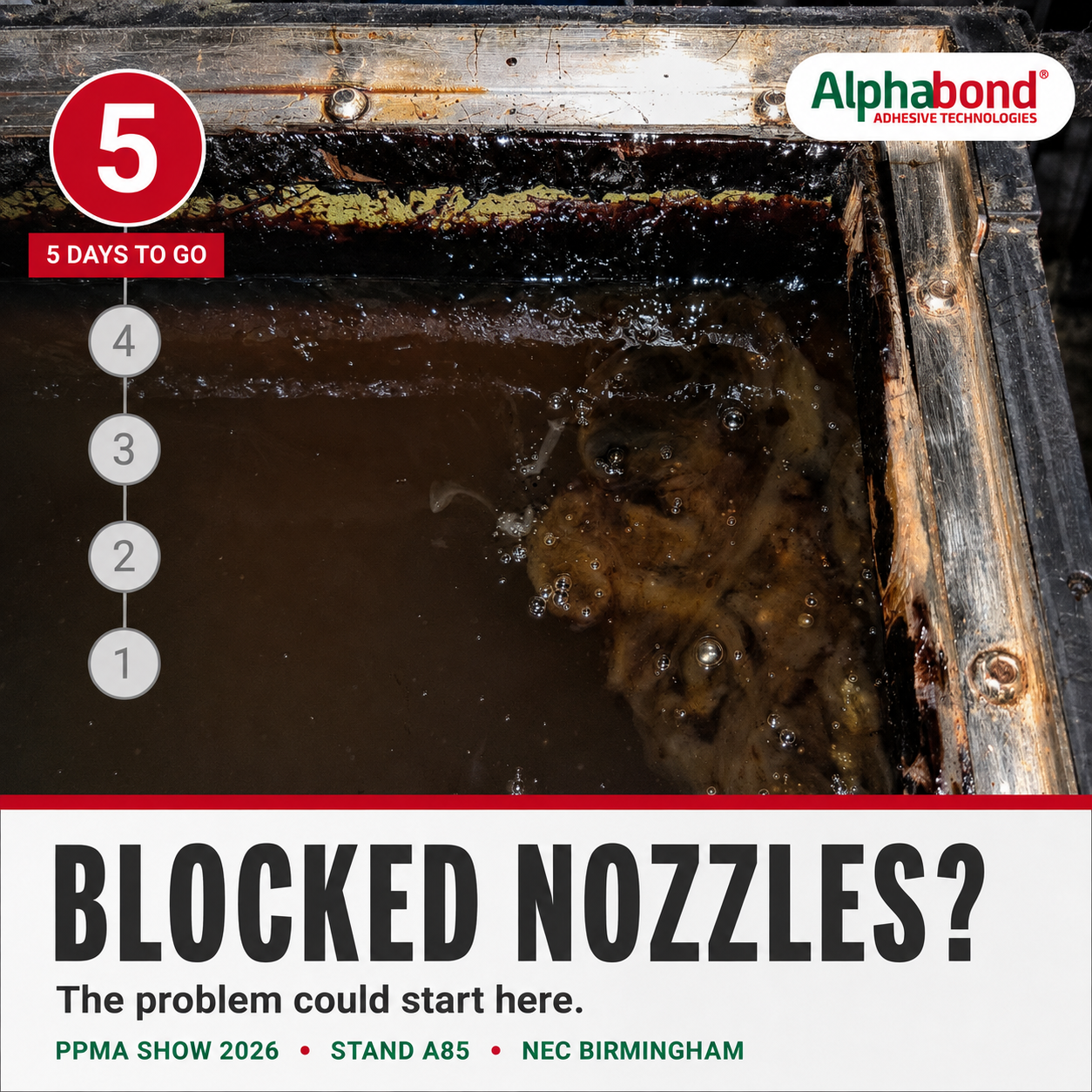
Pull a nozzle apart mid-shift and find it welded shut with black char, and that is not dirt or bad luck. It is adhesive that has sat in the tank too hot for too long, carbonising until a piece breaks free and blocks the orifice. A typical opening is 0.41mm, so it does not take much.
The usual causes are a tank running hotter than it needs to, no standby mode when the line stops, and foreign bodies getting into an open bin. Sites that get the temperature and the housekeeping right have cut adhesive-related downtime by up to 44% before anyone even discussed changing the adhesive.
Stringing and cobwebbing
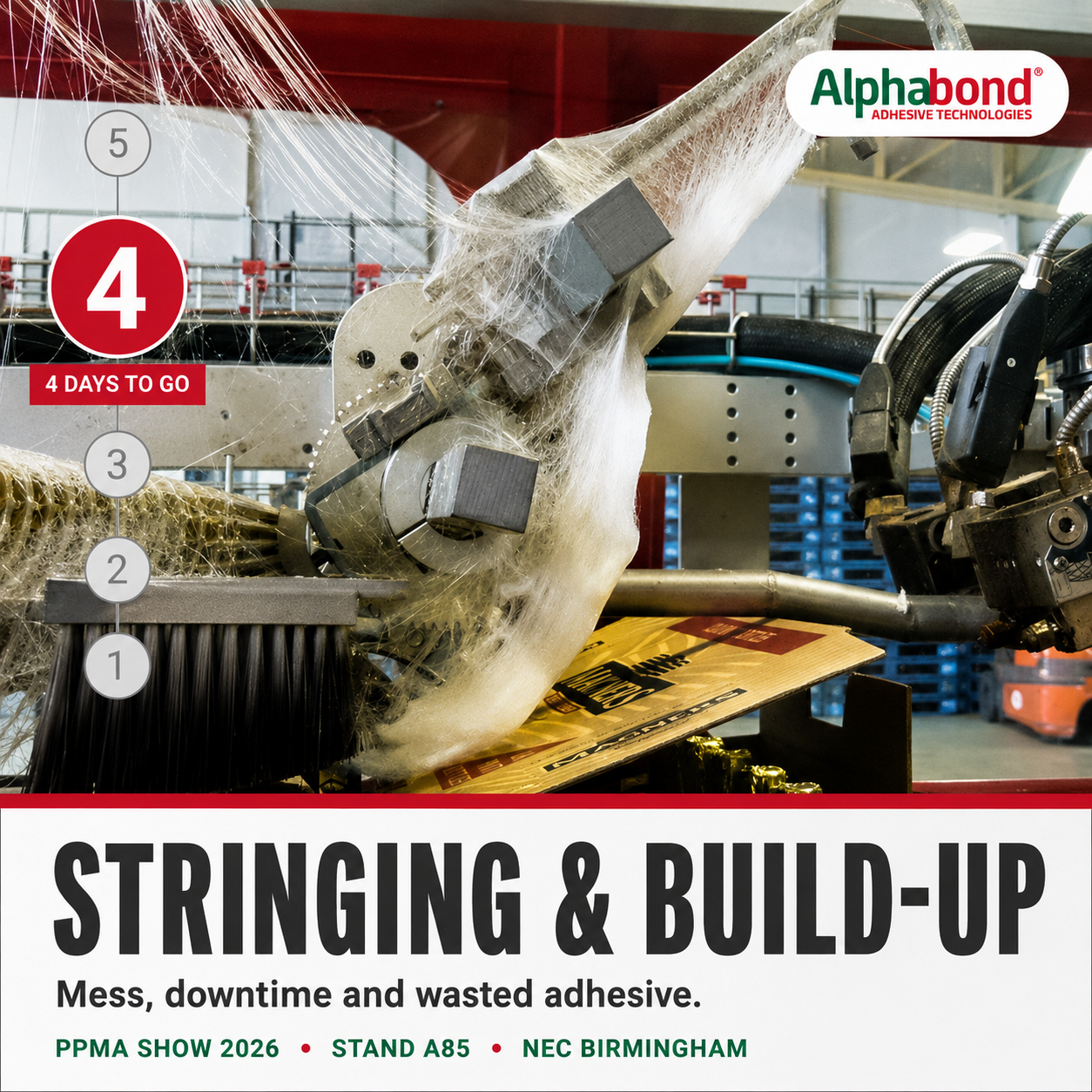
Cobwebs of adhesive hanging off the guide rails look like a housekeeping issue. They are not. That build-up damages belts and trips sensors, which gives you false stops, false rejects and an operator standing over the machine for the third time in an hour.
Normally it is the nozzle sitting too far from the substrate, 2 to 4mm is the number to aim for on high-speed lines, a temperature that is slightly off, or a polymer blend that never suited your line speed. Quick to diagnose properly, miserable to keep firefighting blind. Bring a photo of your rails.
Pop-opens in transit
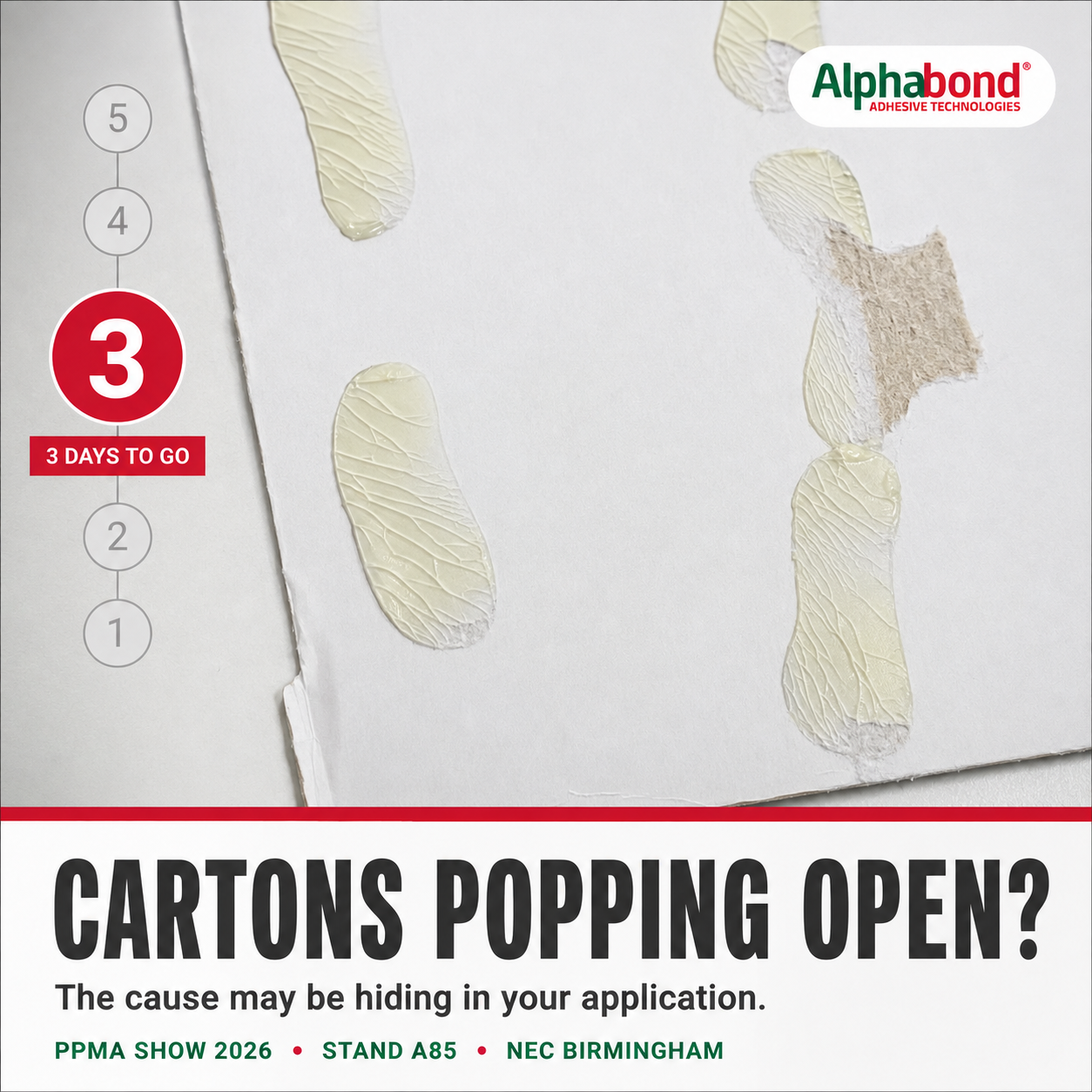
The case looks sealed leaving the line and is open on the pallet, or at your customer's goods-in. Hot melt does not fail in transit because it goes weak. It fails because it never finished setting before the case left compression, usually because the board was warmer than anyone realised, or the grade was never matched to that substrate.
Turning the bead up does not help either. A bigger bead holds its heat longer and takes longer to set, so you have spent more adhesive to make the problem slightly worse.
Energy costs from running hot
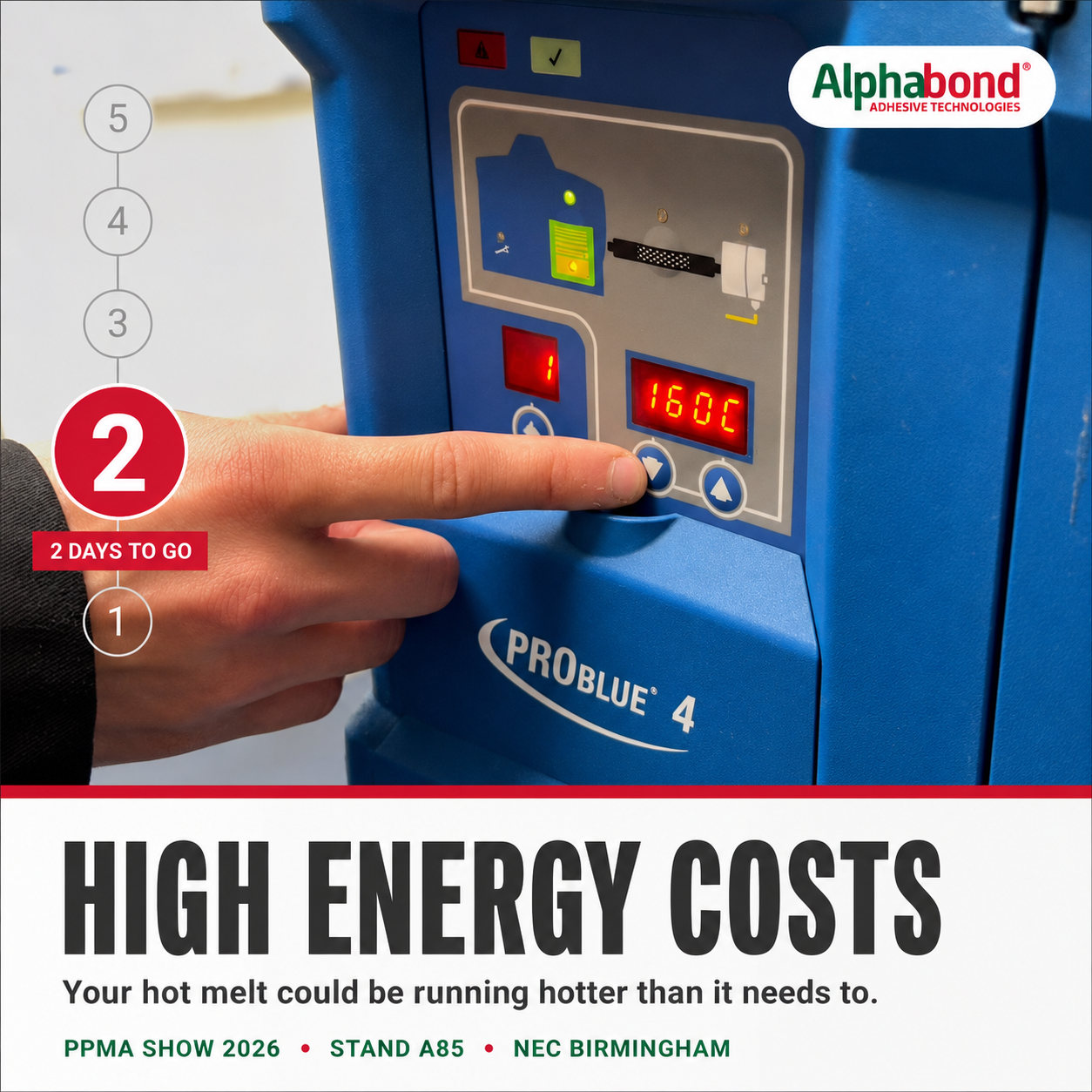
Most hot melt runs at 160 to 180°C because that is what it has always run at, not because anyone checked. You pay for those degrees twice: once in electricity, and again in the char they create, which is what causes half the blocked nozzles and stringing.
UltimateCool, our low-temperature range, runs from as little as 98°C, over 60°C cooler than a traditional hot melt, and cuts energy use by more than 54%. Same bond, same line speed.
The wrong adhesive
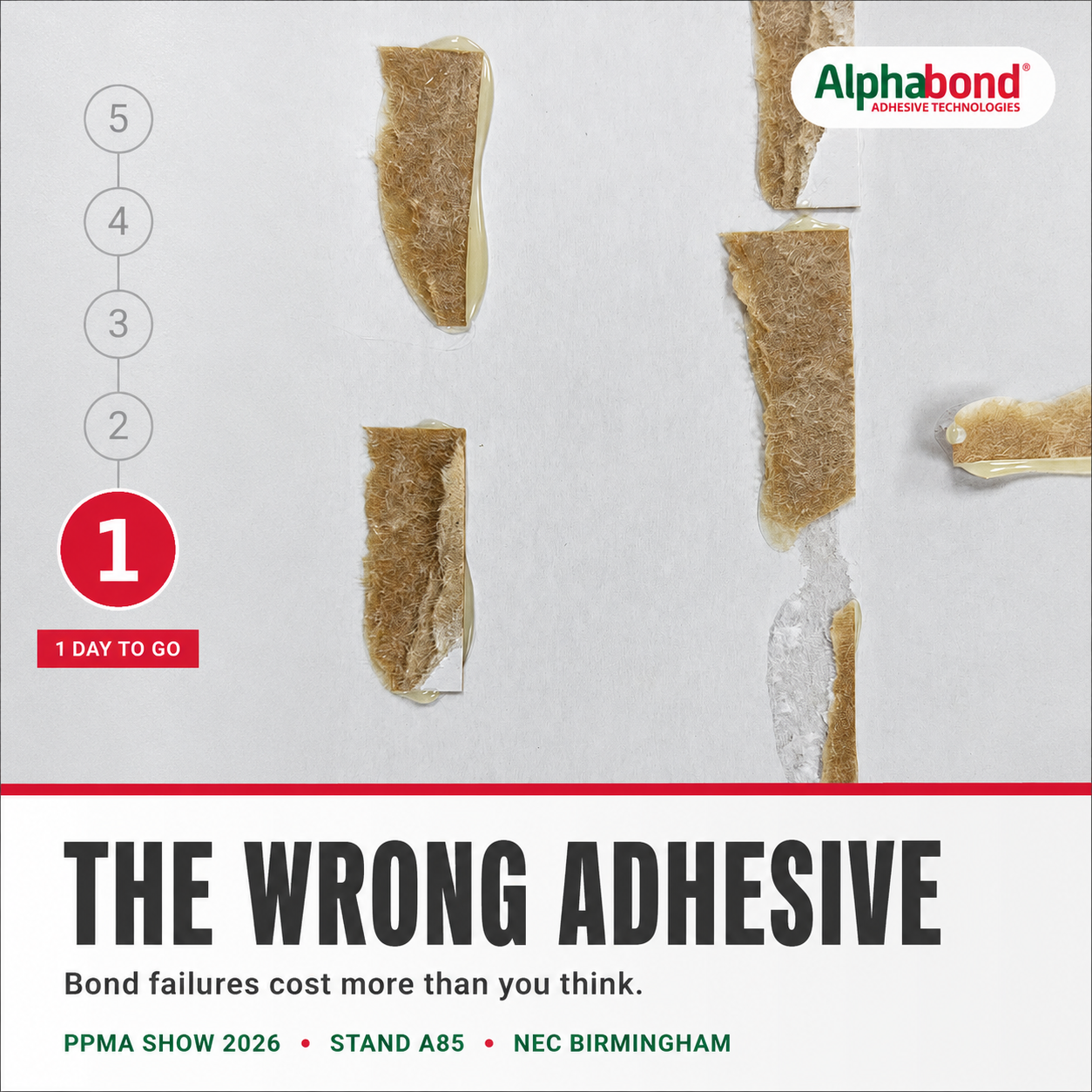
Adhesive is the cheap bit of the pack, right up until it is not, and you are looking at rework, returns or a customer asking why the case fell apart on their line. Plenty of manufacturers are still running whatever grade they were sold years ago, with nobody checking whether it suits the substrate, line speed or volumes now going through.
It is rarely a dramatic failure. It is a slow leak of cost that never gets investigated because the line is technically still running. A proper hot melt review has taken up to 53% off adhesive costs at some sites without changing anything else.
And a practical booklet to take away
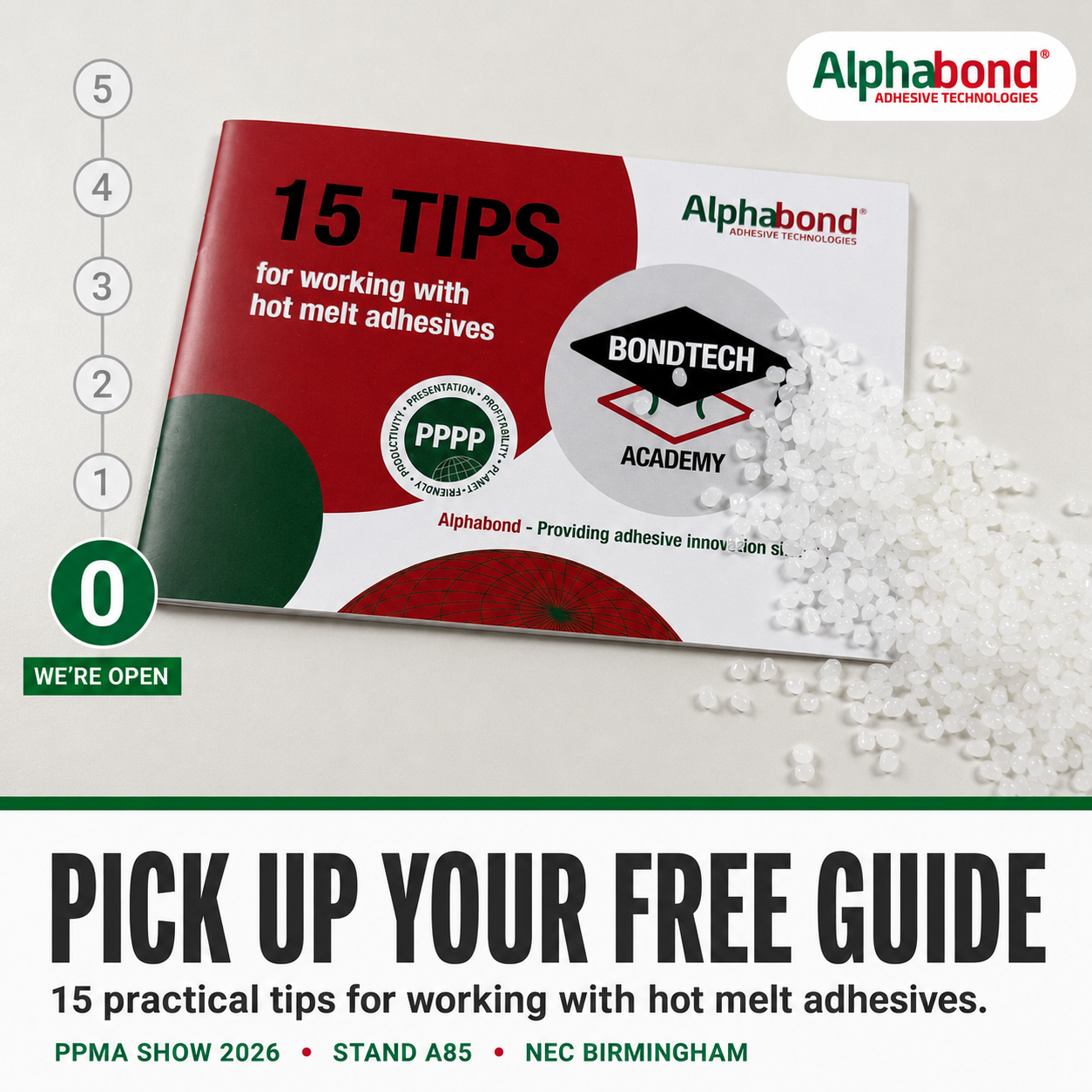
We are bringing a stack of printed copies of 15 Tips for Working with Hot Melt Adhesives. Fifteen practical fixes across blocked nozzles, stringing and pop-opens, the sort of thing an engineer can use on a Monday morning. Come and find us and we will hand you one.
We will be scanning badges on the stand, so we can follow up afterwards with the tips that best match the problem you talked to us about.
And if your problem is not in the booklet, that is honestly the better conversation. Book a slot, tell us what is going wrong, and we will make sure someone who has fixed it before is waiting for you.